
M.Phil Molecular Biology and Genetics
June 25, 2026 2026-07-02 12:03M.Phil Molecular Biology and Genetics
M.Phil Molecular Biology and Genetics
Molecular Biology and Genetics, although distinct fields in themselves but are closely related with a lot of overlapping concepts and techniques that are applied in different areas of science. The scope of Molecular Biology and Genetics in transforming theoretical principles into a multibillion-dollar bioeconomy centered on precision medicine and synthetic biology. This satisfies the need for a comprehensive understanding of emerging trends by moving beyond traditional lab work into the engineering of DNA. This field of science deals with structure, functions and interaction of macromolecules such as nucleic acids and proteins in living organisms. Genetic manipulation using recombinant DNA technology has been harnessed for modifying characteristics in various plant and animal species. The field of Molecular Biology and Genetics is gaining extreme spotlight with the development of more sophisticated experimental techniques such as next generation sequencing, recombinant DNA technology, continuously updated genomic databases, a plethora of gene expression studies, and is becoming increasingly popular owing to its broad interdisciplinary applicability. This M.Phil program will promote lifelong learning and a commitment to professional development in this rapidly evolving field and also inculcate strong social and scientific ethics and values enabling them to become not only good scientists but good citizens and positively contributing members of society
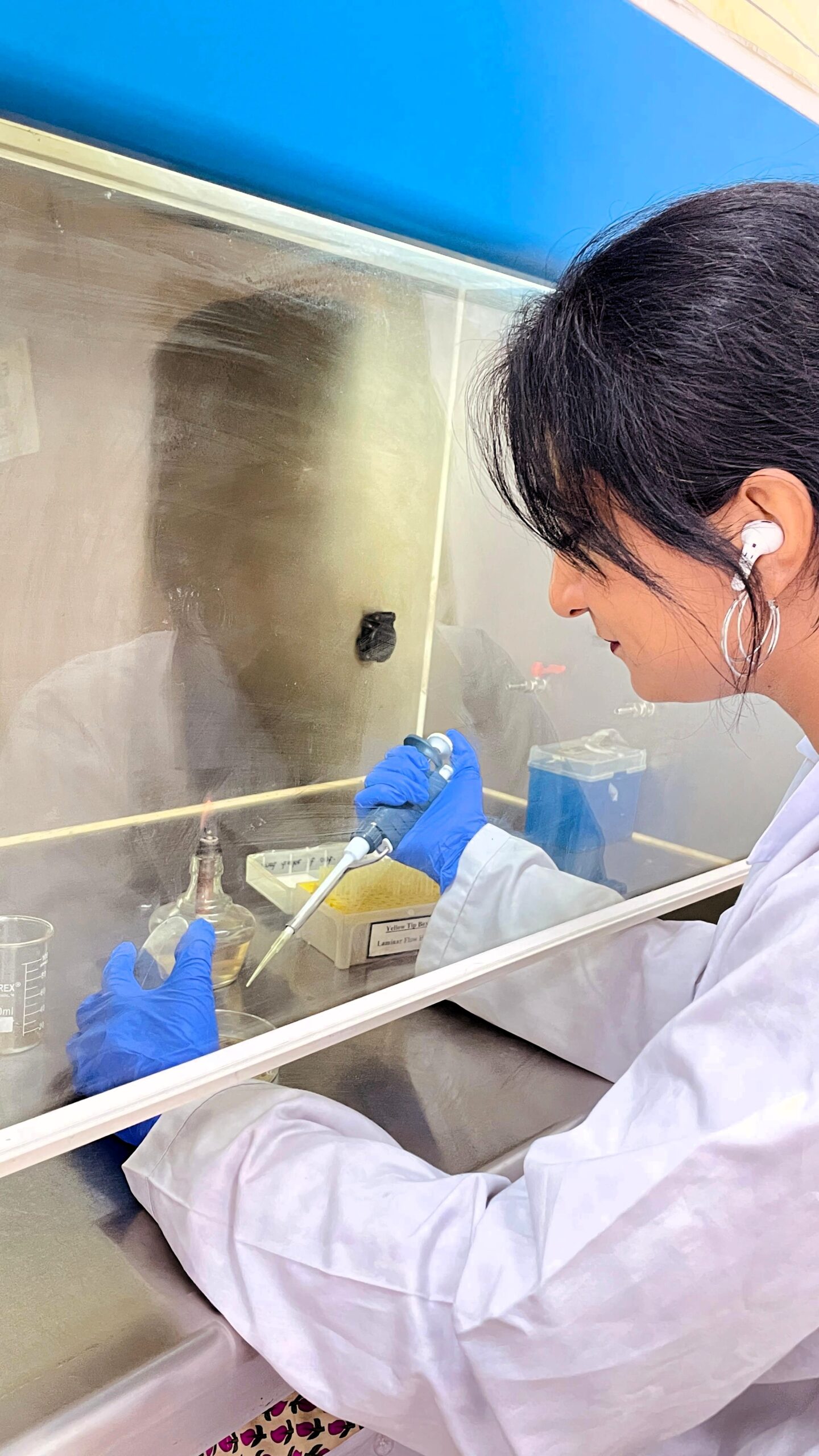
Our vision is focuses on personal and professional development of Graduates enabling them to contribute positively and effectively as responsible citizens and scientists.
The mission of the program is to empower women professionally in the emerging and dynamic field of Biotechnology through quality teaching and research, developing scientific insights among Graduates through comprehensive understanding of theoretical and practical concepts. Another important aspect of the program is to collaborate with scientific community for promoting quality research and to enable Graduates to be able to compete nationally and internationally and secure PhD admissions in institutes of high quality impactful research.
Admission Requirments
- 04 years B.Sc. (Hons) majoring in Genetics, Biotechnology or any other related discipline of Biological Sciences with a minimum CGPA of 2.50 OR 60% in Masters.
- All candidates must appear for the KC Graduate Assessment Test.
- Only short-listed candidates will be called for the Interview.
Road Map
Year 1 - Semester 1
| Code | Course Title | Credit Hours |
|---|---|---|
| XXX XXX | Core Course – I | 3 (3-0) |
| XXX XXX | Core Course – II | 3 (3-0) |
| XXX XXX | Elective – I | 3 (3-0) |
| XXX XXX | Elective – II | 3 (3-0) |
Year 1 - Semester 2
| Code | Course Title | Credit Hours |
|---|---|---|
| XXX XXX | Core Course – III | 3 (3-0) |
| XXX XXX | Core Course – IV | 3 (3-0) |
| XXX XXX | Elective – III | 3 (3-0) |
| XXX XXX | Elective – IV | 3 (3-0) |
Year 2 - Semester 3 & 4
| Code | Course/Requirement | Credit Hours |
|---|---|---|
| XXX XXX | Research Dissertation | 6 |
List of Core Courses
Course Code | Course Title | Credit Hours |
MBG-XXX | Advances in Molecular Genetics | 3 (3-0) |
MBG-XXX | Advances in Molecular Biology | 3 (3-0) |
MBG-XXX | Recent Trends in Genetic Engineering | 3 (3-0) |
MBG-XXX | Recent Trends in Molecular Diagnostic | 3 (3-0) |
List of Elective Courses
| Course Code | Course Title | Credit Hours | |
| MBG-XXX | Advanced Cytogenetics | 3 (3-0) | |
| MBG-XXX | Advances in Agriculture Biotechnology | 3 (3-0) | |
| MBG-XXX | Advances in animal cell Culture | 3 (3-0) | |
| MBG-XXX | Advances in animal Molecular Biology | 3 (3-0) | |
| MBG-XXX | Advances in Biochemistry | 3 (3-0) | |
| MBG-XXX | Advances in Biosensor Technologies | 3 (3-0) | |
| MBG-XXX | Advances in Biotechnology | 3 (3-0) | |
| MBG-XXX | Advances in Cell and Molecular Biology | 3 (3-0) | |
| MBG-XXX | Advances in Environmental Biotechnology | 3 (3-0) | |
| MBG-XXX | Advances in Fermentation Technology | 3 (3-0) | |
| MBG-XXX | Advances in Forensic Sciences | 3 (3-0) | |
| MBG-XXX | Advances in Fungal Biotechnology | 3 (3-0) | |
| MBG-XXX | Advances in Genomics | 3 (3-0) | |
| MBG-XXX | Advances in Health Biotechnology | 3 (3-0) | |
| MBG-XXX | Advances in Immunology | 3 (3-0) | |
| MBG-XXX | Advances in Laboratory Research Techniques | 3 (3-0) | |
| MBG-XXX | Advances in Microbiology | 3 (3-0) | |
| MBG-XXX | Advances in neurobiology | 3 (3-0) | |
| MBG-XXX | Advances in Pharmacogenomics | 3 (3-0) | |
| MBG-XXX | Advances in Physiological Genetics | 3 (3-0) | |
| MBG-XXX | Advances in plant Molecular Biology | 3 (3-0) | |
| MBG-XXX | Advances in Plant Tissue Culture | 3 (3-0) | |
| MBG-XXX | Advances in Population Genetics | 3 (3-0) | |
| MBG-XXX | Advances in Protein Chemistry | 3 (3-0) | |
| MBG-XXX | Advances in Proteomics | 3 (3-0) | |
| MBG-XXX | Advances in Vaccine Research | 3 (3-0) | |
| MBG-XXX | Animal Breeding and Genetics | 3 (3-0) | |
| MBG-XXX | Applications of Nanobiotechnology | 3 (3-0) | |
| MBG-XXX | Applied Genetic Analysis | 3 (3-0) | |
| MBG-XXX | Aquatic Biotechnology and Genetics | 3 (3-0) | |
| MBG-XXX | Behavioral Genetics | 3 (3-0) | |
| MBG-XXX | Bioethics, Biosecurity, Biosafety & Dual Use Education | 3 (3-0) | |
| MBG-XXX | Biofilms-natural communities | 3 (3-0) | |
| MBG-XXX | Biologics | 3 (3-0) | |
| MBG-XXX | Biometrical Techniques in genetics | 3 (3-0) | |
| MBG-XXX | Biopharming in Plants, Principles and Techniques | 3 (3-0) | |
| MBG-XXX | Biophysics | 3 (3-0) | |
| MBG-XXX | Bioprocess Technology | 3 (3-0) | |
| MBG-XXX | Bioremediation and Biodegradation | 3 (3-0) | |
| MBG-XXX | Bioresources and Gene Pool Conservation | 3 (3-0) | |
| MBG-XXX | Biostatistics & Laboratory Mathematics | 3 (3-0) | |
| MBG-XXX | Biotechnology Law & Regulation | 3 (3-0) | |
| MBG-XXX | Biotechnology of Nonrenewable Resources | 3 (3-0) | |
| MBG-XXX | Cancer Biology | 3 (3-0) | |
| MBG-XXX | Cancer Genetics | 3 (3-0) | |
| MBG-XXX | Cellular Signaling | 3 (3-0) | |
| MBG-XXX | Clinical Genetics | 3 (3-0) | |
| MBG-XXX | Conservation Genetics | 3 (3-0) | |
| MBG-XXX | Current Trends in Molecular Medicine | 3 (3-0) | |
| MBG-XXX | DNA Barcoding | 3 (3-0) | |
| MBG-XXX | DNA Damage and Repair | 3 (3-0) | |
| MBG-XXX | Drug Discovery | 3 (3-0) | |
| MBG-XXX | Ecological and Evolutionary Genetics | 3 (3-0) | |
| MBG-XXX | Epigenetics | 3 (3-0) | |
| MBG-XXX | Forensic Genetics | 3 (3-0) | |
| MBG-XXX | Gene Mapping | 3 (3-0) | |
| MBG-XXX | Gene Therapy | 3 (3-0) | |
| MBG-XXX | Genetic Epidemiology | 3 (3-0) | |
| MBG-XXX | Genetics of Ageing | 3 (3-0) | |
| MBG-XXX | Genetics of Infectious Diseases | 3 (3-0) | |
| MBG-XXX | Human Molecular Genetics | 3 (3-0) | |
| MBG-XXX | Medicinal Plant Biotechnology | 3 (3-0) | |
| MBG-XXX | Metabolic Engineering and Biofuels | 3 (3-0) | |
| MBG-XXX | Metabolic Pathways in Plants | 3 (3-0) | |
| MBG-XXX | Metabolomics | 3 (3-0) | |
| MBG-XXX | Microbial Enzyme Technology | 3 (3-0) | |
| MBG-XXX | Mitochondrial Genetics | 3 (3-0) | |
MBG-XXX | Modern Biotechnology: Principles & Applications | 3 (3-0) |
| |
MBG-XXX | Modern Languages (any foreign language) | 3 (3-0) |
| |
MBG-XXX | Molecular Microbial Ecology | 3 (3-0) |
| |
MBG-XXX | Molecular Systematic | 3 (3-0) |
| |
MBG-XXX | Molecular Techniques in Crop Improvement | 3 (3-0) |
| |
MBG-XXX | Molecular Virology | 3 (3-0) |
| |
MBG-XXX | Neuro-Genetics | 3 (3-0) |
| |
MBG-XXX | Plant Microbe Interaction | 3 (3-0) |
| |
MBG-XXX | Probiotics | 3 (3-0) |
| |
MBG-XXX | Professionalism Molecular Biology | 3 (3-0) |
| |
MBG-XXX | Quantitative Genetics | 3 (3-0) |
| |
MBG-XXX | Recent trends in Biochemical Engineering | 3 (3-0) |
| |
MBG-XXX | Recombinant DNA technology | 3 (3-0) |
| |
MBG-XXX | Regulation of Gene Expression | 3 (3-0) |
| |
MBG-XXX | Research Methodology & Scientific Writing* | 3 (3-0) |
| |
MBG-XXX | Signal Transduction | 3 (3-0) |
| |
MBG-XXX | Stem Cell Biology | 3 (3-0) |
| |
Research Thesis
An M.Phil candidate who has completed her course work with a minimum CGPA of 3.00 must present and pass the oral proposal defense examination before she is allowed to carry out her Masters research. On passing the thesis proposal defense the student must carry out a research study which is described in a thesis. She must successfully defend the completed work in an oral examination involving a presentation and question answer session in the presence of an external examiner.