
BS Computer Science
February 22, 2024 2025-06-23 12:38BS Computer Science
Accredited by NCEAC
BS Computer Science
The number, size, and application domains of computer programs have grown dramatically; as a result, huge sums are being spent on software development. Most people’s lives and livelihoods depend on this development’s effectiveness. They provide information, make us more effective problem solvers, and provide us with safer, more flexible, and less confining work, entertainment, and recreation environments.
We aim to create computer scientists who can take on the complex technological problems of modern society by building robust software systems, develop efficient computing algorithms, and help machines think and see intelligently, fulfilling the demand for computer science researchers and software developers in Pakistan.
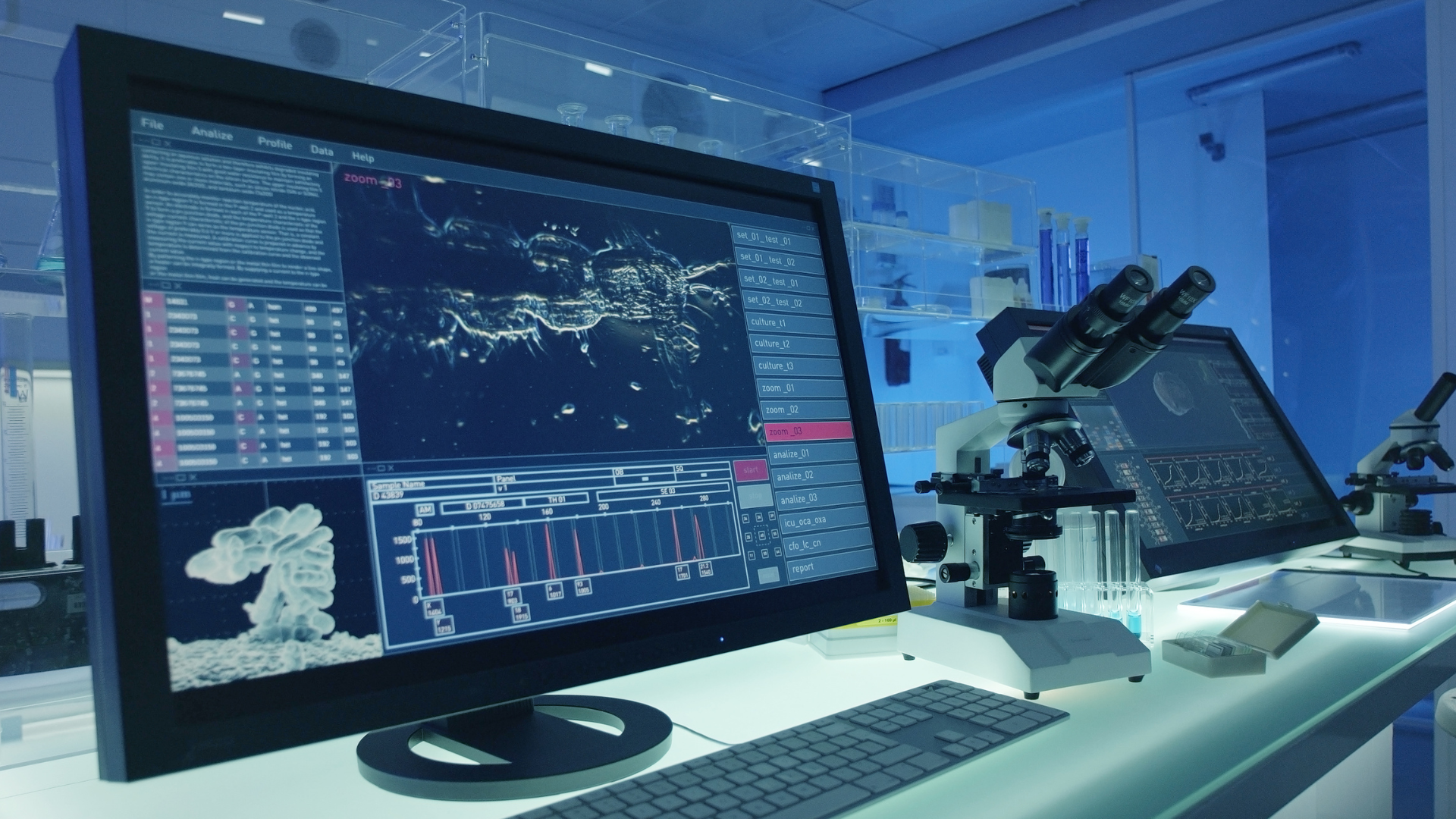
The program offers a wide matrix of interesting courses, to help students attain a broad understanding of the concepts, techniques and theory of Computer Science.
- Aims at developing the student’s critical professional thinking and intuition.
- Focuses on developing critical professional thinking and intuition.
- The curriculum includes a balanced mixture of theory and practical experiences at both foundation and advanced levels.
- Graduates are equipped to make sound professional decisions in Computer Science.
- Potential roles include software developers, testers, and positions at the research, development, and planning levels.
- The program serves as an excellent foundation for further formal learning and training.
Admission Requirments
Qualifications:
F.Sc with Pre Engineering / Pre Medical / ICS Stats / ICS Physics with minimum 60% marks OR A-level in three main subjects (no subsidiary) with minimum Grade B (60%) with Equivalence Certificate and must have studied Mathematics.
All candidates must appear for an aptitude test consisting of mathematics, problem solving, critical reasoning, comprehension and sentence corrections. Click here to download the test pattern.
Degree Requirments
To receive BS Computer Science degree, a student must complete a total of 134 credit hours with a minimum CGPA of 2.50
Final Year Projects
Road Map
Semester 1
| Course Title | Credit Hours | Category |
|---|---|---|
| English-I | 3 | Major |
| Introduction to Computers and Analytical Problem Solving | 3+1 | Major |
| Calculus-I | 3 | Major |
| Management Related | 3 | Elective |
| Programming Fundamentals | 3+1 | Major |
| Total Credit Hours: 17 | ||
Semester 2
| Course Title | Credit Hours | Category |
|---|---|---|
| English-II | 3 | Major |
| Probability and Statistics | 3 | Major |
| Electromagnetism and Wave Theory | 3 | Major |
| ACP (Social Service) | Elective | Elective |
| Object Oriented Programming | 3+1 | Major |
| Digital Logic and Design | 3+1 | Major |
| Total Credit Hours: 17 | ||
Semester 3
| Course Title | Credit Hours | Category |
|---|---|---|
| Professional Practices | 3 | Major |
| Calculus-II | 3 | Major |
| Data Structures and Algorithms | 3+1 | Major |
| Discrete Mathematics | 3 | Major |
| Computer Organization and Assembly Language | 3+1 | Major |
| Total Credit Hours: 17 | ||
Semester 4
| Course Title | Credit Hours | Category |
|---|---|---|
| Pakistan Studies | 3 | Major |
| Linear Algebra-I | 3 | Major |
| Economics Related | 3 | Elective |
| Database Systems | 3+1 | Major |
| Design and Analysis of Algorithms | 3 | Major |
| Theory of Automata | 3 | Major |
| Total Credit Hours: 18 | ||
Semester 5
| Course Title | Credit Hours | Category |
|---|---|---|
| Islamic Studies/Ethics | 2 | Major |
| Differential Equations | 3 | Major |
| Foreign Language | 2/3 | Elective |
| Operating Systems | 3+1 | Major |
| Software Engineering | 3 | Major |
| Compiler Construction | 3 | Major |
| Total Credit Hours: 16 | ||
Semester 6
| Course Title | Credit Hours | Category |
|---|---|---|
| English-III | 3 | Major |
| Computer Networks | 3+1 | Major |
| Artificial Intelligence | 3+1 | Major |
| Mobile Application Development | 3 | Elective |
| Web Engineering | 3 | Elective |
| Total Credit Hours: 16 | ||
Semester 7
| Course Title | Credit Hours | Category |
|---|---|---|
| Numerical Computing | 3 | Major |
| Social Science | 3 | Elective |
| Final Year Project | — | Major |
| Computer Architecture | 3+1 | Major |
| Software Testing and Quality Assurance | 3 | Elective |
| Human-Computer Interaction | 3 | Elective |
| Total Credit Hours: 15 | ||
Semester 8
| Course Title | Credit Hours | Category |
|---|---|---|
| Final Year Project Continued. | — | Major |
| Information Security | 3 | Major |
| Parallel and Distributed Computing | 3 | Major |
| Mobile and Wireless Communication | 3 | Elective |
| Total Credit Hours: 6+9 | ||
Courses Breakup
| Category | Credit Hours |
|---|---|
| General Education Courses | 19 |
| Mathematics and Science Foundation Courses | 12 |
| Computer Science Supporting Courses | 9 |
| University Elective Courses | 11 |
| Computing Core Courses | 37 |
| Computer Science Elective | 15 |
| Computer Science Core Courses | 27 |
| Total | Min. 130 |
Program Education Objectives
PEO-1: Produce graduates equipped for the local and global IT workforce, contributing to Pakistan’s technology-driven economy while innovating to solve real-world challenges. Emphasize skills for designing effective solutions in professional, entrepreneurial, or R&D settings.
PEO-2: Develop strong interpersonal skills including effective communication, responsible teamwork, time management, and ethical conduct, empowering our graduates to advance to leadership roles in their careers.
PEO-3: Foster a passion for lifelong learning in students to facilitate long-term career advancement, encourage the pursuit of higher studies, and promote professional development. This will enable them to remain competitive in an evolving job market shaped by automation and instill a sense of social responsibility.
Program Learning Objectives
PLO-1 Academic Education: To prepare graduates as computing professionals.
PLO-2 Knowledge for Solving Computing Problems: Apply knowledge of computing fundamentals, knowledge of a computing specialization, and mathematics, science, and domain knowledge appropriate for the computing specialization to the abstraction and conceptualization of computing models from defined problems and requirements.
PLO-3 Problem Analysis: Identify and solve complex computing problems reaching substantiated conclusions using fundamental principles of mathematics, computing sciences, and relevant domain disciplines.
PLO-4 Design/Development of Solutions: Design and evaluate solutions for complex computing problems, and design and evaluate systems, components, or processes that meet specified needs.
PLO-5 Modern Tool Usage: Create, select, or adapt and then apply appropriate techniques, resources, and modern computing tools to complex computing activities, with an understanding of the limitations.
PLO-6 Individual and Teamwork: Function effectively as an individual and as a member or leader of a team in multidisciplinary settings.
PLO-7 Communication: Communicate effectively with the computing community about complex computing activities by being able to comprehend and write effective reports, design documentation, make effective presentations, and give and understand clear instructions.
PLO-8 Computing Professionalism and Society: Understand and assess societal, health, safety, legal, and cultural issues within local and global contexts, and the consequential responsibilities relevant to professional computing practice
PLO-9 Ethics: Understand and commit to professional ethics, responsibilities, and norms of professional computing practice.
PLO-10 Life-long Learning: Recognize the need, and have the ability, to engage in independent learning for continual development as a computing professional.
Active Citizenship Program
Active Citizenship program offered by Kinnaird College in collaboration with British Council and HEC is a social leadership training program that promotes intercultural dialogue and community-led social development. It is a mandatory requirement for the completion of underGraduate degree and based on two semesters. All students will study the theoretical portion through different activities starting in their 3rd semester. They will plan their social action projects in 4th semester and implement it in the field.